

Is Your Dog Drinking Enough Water? Recognizing Dehydration Signs in Active Summer Pets
Summer is full of sunshine, backyard zoomies, pool days, long walks, and dogs living their absolute best lives. But while we’re busy soaking up the season, the risk of dehydration can sneak up fast, especially during those brutally hot summer days. One minute, your dog is happily chasing a tennis ball, and the next, they could be overheated, exhausted, and dangerously dehydrated before you even realize something is wrong.
The truth is, dehydration in pets can become serious quickly. Knowing what to look for and how to prevent it can make all the difference in keeping your furry family member safe, healthy, and ready for more summer adventures.
Summer Pet Hydration Wellness
When it comes to summer pet hydration, every dog is different. Age, breed, activity level, and climate all play a role in how much water your dog needs daily.
Puppies and senior dogs are often more vulnerable to dehydration because their bodies can struggle to regulate temperature efficiently. Flat-faced breeds like Bulldogs, Pugs, and Boston Terriers can also overheat quickly because breathing is already more difficult for them.
A general rule for healthy water consumption is one ounce of water per pound of body weight daily. Active dogs who spend hours running, hiking, swimming, or playing outside, and burn through water more quickly, may need even more.
An easy way to encourage hydration is to make it fun! Toss a few ice cubes in the bowl, use a pet fountain, or offer chilled water after outdoor playtime. Some dogs love frozen treats made from low-sodium broth or watermelon.
Dehydration Symptoms in Dogs
Dogs cannot tell us when they feel thirsty or overheated, so it’s important to recognize the signs of dehydration in dogs before the situation becomes an emergency.
Common dehydration signs include:
- Excessive panting
- Dry or sticky gums
- Sunken eyes
- Lethargy or weakness
- Loss of appetite
- Thick saliva
- Vomiting or diarrhea
- Reduced skin elasticity
A quick at-home check for dehydration is the “skin tent” test. Gently lift the skin between your dog’s shoulders and release it. In a hydrated dog, the skin will return to normal. If the skin stays tented or moves slowly, dehydration could be developing.
You may also notice your dog acting unusually tired during walks or lying down more often than usual. Some dogs become restless or anxious when overheated, while others may seem withdrawn and sluggish.
If your pet is vomiting, collapsing, refusing water, or struggling to breathe, you should seek immediate veterinary care.
Tips for Prevention
The good news is that preventing dehydration is usually much easier than treating it.
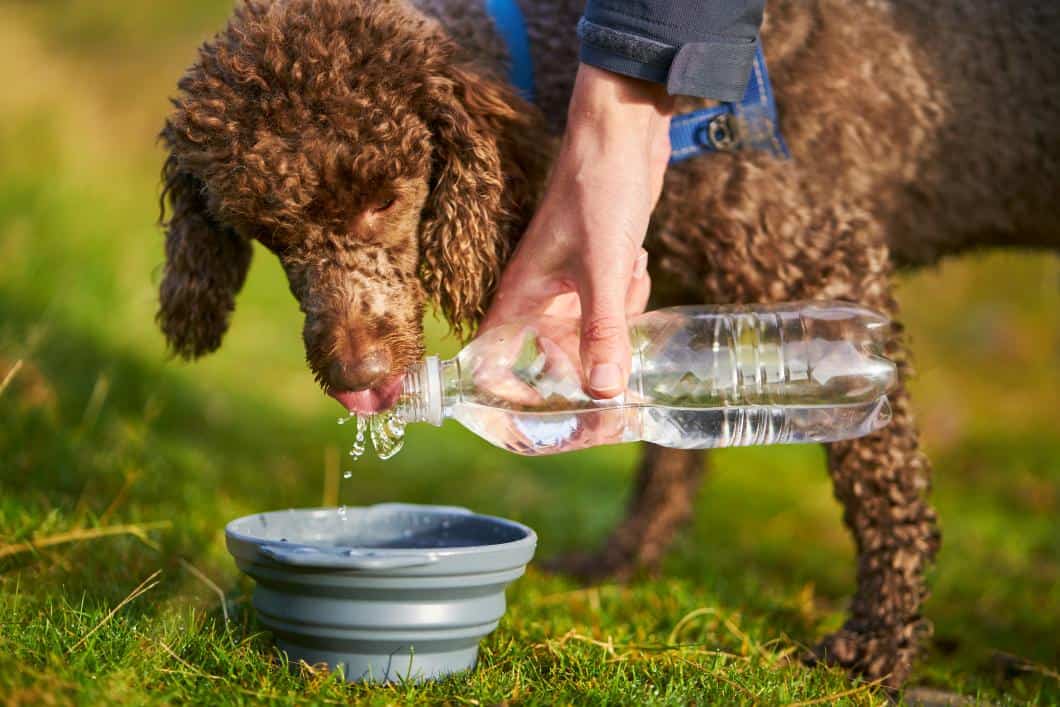
Always provide fresh, cool water both indoors and outdoors. Bring portable water bowls on walks, hikes, or trips to the park. Avoid outdoor activity during the hottest part of the day and stick to early morning or evening walks when temperatures are lower.
Shade is also essential. Even dogs who love sunbathing need a cool place to rest and recover. Cooling mats, fans, and kiddie pools can all help keep your pet’s body temperature down during extreme heat.
Make Summer Safe for Your Pet
Summer should be filled with tail wags, adventures, and happy memories, not emergency vet visits caused by dehydration or heat exhaustion. Paying attention to your dog’s water intake and recognizing early warning signs can help keep them safe all summer long.
Simple ways to keep pets hydrated:
- Provide fresh water
- Bring water on walks
- Avoid afternoon heat
- Take outdoor shady breaks
- Offer ice cubes or frozen treats
- Watch for heavy panting or fatigue
- Never leave pets in parked cars
- Schedule wellness exams
At the end of the day, summer pet hydration is not just about comfort; it is about safety. A little extra attention can help prevent serious health risks and keep your pet happy and healthy.
Don’t Let Dehydration Ruin Summer Fun
Summer heat can become dangerous faster than many pet owners realize. If your dog is showing signs of dehydration, like excessive panting, low energy, dry gums, or decreased appetite, don’t wait for things to get worse. Early care makes all the difference.
Whether your pet needs a wellness exam, hydration support, or simply a summer safety check-up, our team at Crossroads Animal Hospital is here to help. Schedule your pet’s appointment today and keep them healthy, hydrated, and ready for every tail-wagging summer adventure.